Buying land around McCall can feel simple at first glance. You find a beautiful parcel, picture the cabin or mountain home you want, and start planning. But in this market, the real question is not just whether you like the land. It is whether you can actually access it, serve it with utilities, and build what you have in mind. This guide walks you through the key issues to check before you buy so you can move forward with more clarity and fewer surprises. Let’s dive in.
Start With Jurisdiction
The first step is finding out which local rules apply to the parcel. Around McCall, that can depend on whether the land is inside city limits or in unincorporated Valley County.
According to Valley County, the new McCall impact area boundary took effect on January 1, 2026, and the county now administers permitting in unincorporated areas that were previously managed by the City of McCall. The city’s design-criteria page also directs applicants in the area of impact to contact Valley County.
That matters because the permitting path can change quickly depending on location. In Valley County, the land-use system is described as performance-based, where agriculture and single-family residences are allowed and most other uses require a permit.
If you are evaluating raw land, start with this basic checklist:
- Is the parcel inside McCall city limits?
- Is it in unincorporated Valley County?
- Does your intended use fall under standard residential use, or could it require additional review?
Check Access Before Anything Else
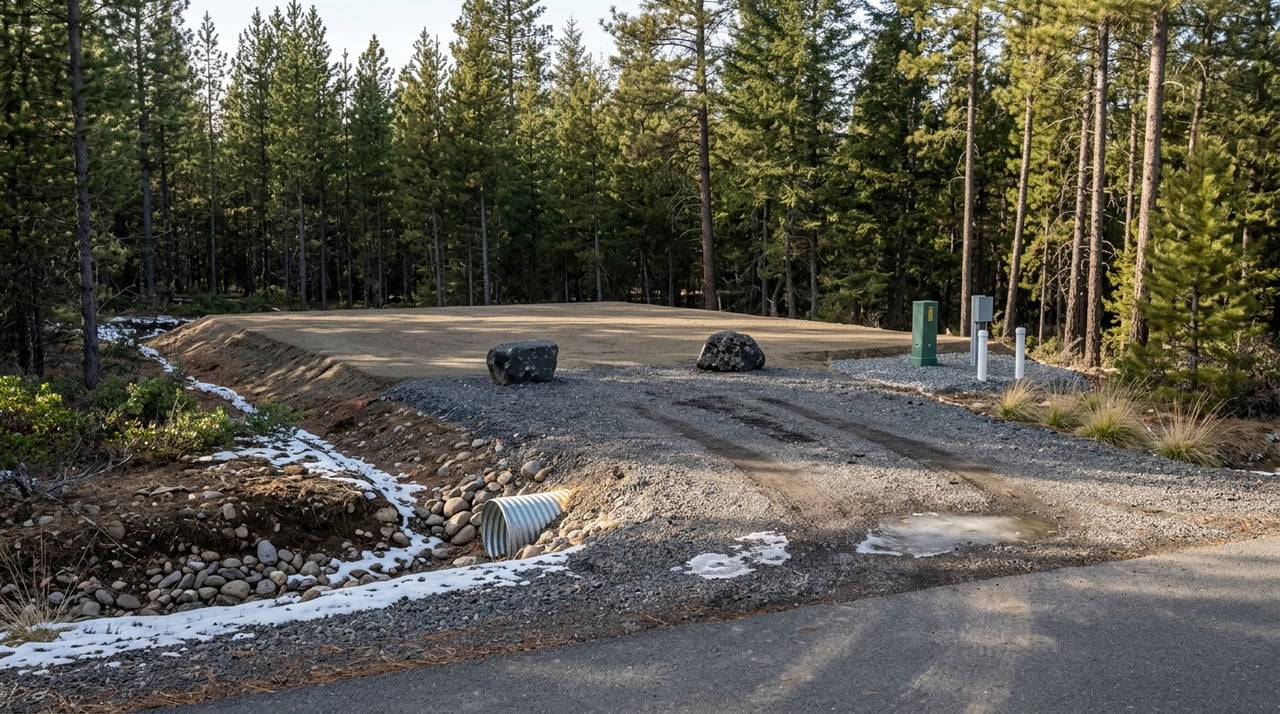
A parcel can look ideal on paper and still be hard to build on if access is limited. Road frontage, driveway feasibility, and easements are often some of the most important details in a land purchase.
Valley County standards say lots for conditional uses need direct frontage on a public or private road, a reasonable building site, and access to that site, according to the county code. The same standards note a 100-foot setback from Highway 55, and an Idaho Transportation Department access permit may be required in some cases.
The county also measures setbacks from the eaves rather than the wall. If you are planning deep roof overhangs for a mountain-style home, that can reduce your usable building envelope more than you might expect.
Why Frontage and Parcel Shape Matter
Lot shape can have a direct impact on whether a home, garage, driveway, septic area, and setback requirements all fit together. Long, narrow, irregular, or heavily sloped parcels often need a closer look.
Within McCall, the city code ties build potential to lot size, frontage, and setbacks. Residential standards vary by zone, with minimum frontage ranging from 300 feet in RR to 25 feet in R16, along with different property size and setback rules.
That means acreage alone does not tell the whole story. Two parcels with similar sizes may have very different build potential based on frontage, shape, or zone.
Steep Sites Need Driveway Review
Steeper parcels can be attractive, especially if they offer views, but driveway standards may affect cost and feasibility. In McCall, the driveway code says private driveways cannot exceed 10 percent grade where they meet a street and must include a 5-foot landing with a maximum 6 percent grade.
The code also requires an all-weather surface, and driveways longer than 150 feet need a turnaround area. If a driveway serves more than one dwelling, recorded access easements may also be required.
Before you buy a hillside lot, it is smart to ask whether a driveway can reasonably meet these standards. A parcel with beautiful views may still require added site work, engineering, or design changes.
Utilities Can Make or Break a Parcel
For many buyers, utilities are the real bottleneck. Water, well approval, septic layout, and permit timing can shape both your budget and your building timeline.
Inside city limits, the City of McCall manages water service, but it states that it does not handle sewer or trash. So a parcel may have city water, no city sewer, or neither, depending on the exact location.
That is why utility research should happen early. You want to know not only what is available now, but what approvals will be needed if service is not already in place.
Private Wells in Valley County
If a parcel will need a private well, Idaho requires a drilling permit before construction, and all wells must be built by a licensed well driller, according to the Idaho Department of Water Resources. IDWR also says domestic wells do not need other approvals before the drilling permit can be approved.
Idaho Health and Welfare states that private wells are not regulated, which means owners are responsible for water safety. The guidance recommends annual testing for bacteria and nitrates and testing every 3 to 5 years for other contaminants.
For a buyer, this means a well is more than a utility line item. It is part of your long-term property planning and maintenance.
Septic Approval Is a Major Due Diligence Item
If city sewer is not available, septic review is essential. The Idaho Department of Environmental Quality says public health districts administer septic rules, issue installation permits, and may perform site evaluations.
DEQ also recommends that buyers get a site evaluation from the public health district and a licensed installer before buying property and applying for a permit. In Valley County, Central District Health provides local septic permit applications and fees.
This is one of the most important takeaways for land buyers around McCall. A parcel may look buildable, but septic setbacks, soils, slope, and layout can all affect whether the site works for the home you want.
Septic Setbacks Can Shrink Build Area
Septic separation distances can limit where you place a home, well, and drainfield. According to Central District Health technical guidance, a septic tank must be 50 feet from a domestic well, and a drainfield must be 20 feet from a dwelling with a basement.
Valley County also says the minimum lot size for new subdivisions is 1 acre when individual wells and septic systems are proposed, with smaller minimums only when central water or sewer is available. On smaller or oddly shaped lots, these distances can quickly reduce the usable building area.
Understand Permit Timing
Even when a parcel appears workable, permit sequencing can affect your schedule. That is especially true if road access or septic approval is still pending.
Valley County’s building permit instructions state that a human-habitation building needs evidence of sanitary sewer approval. They also note that a new driveway off a public road requires a road department permit.
If the septic permit is not yet in hand, the county says the building permit process can begin, but the building permit will not be issued until septic approval is received. For buyers planning to break ground quickly, this is a key detail to understand upfront.
McCall Design Review Can Affect Cost
If your parcel is within the City of McCall, design review may be part of the process. That can influence both your timeline and your final construction budget.
The city code says design review applies to all new construction and remodeling of structures, landscaping, lighting, and public amenities in the McCall Area. No city permits may be issued for work requiring design review until those requirements are met and approval is granted.
Some smaller projects may be approved administratively. Under the design review procedures, that can include accessory structures, facade changes, and single-family homes under 5,000 square feet that are not in an overlay zone. Larger projects or those in overlay areas may go before the Planning and Zoning Commission.
Building Standards Shape the Envelope
McCall’s residential standards also affect what you can build. The city code sets maximum heights of 35 feet in residential zones, with a 50-foot exception tied to local-housing provisions, and a maximum single-family residential unit size of 10,000 square feet.
The city’s design-criteria page also notes that covered decks and covered patios count at 100 percent toward lot coverage. It further identifies site conditions that can affect design and cost, including a 150 psf ground snow load, 115 mph wind speed, and 24-inch frost depth.
In practical terms, your dream plan may need adjustment based on rooflines, porches, site coverage, and structural design requirements. That is especially relevant for custom homes with generous outdoor living areas.
County Land Requires Site-Specific Review
Outside the city, Valley County does not use a traditional zoning model in the same way McCall does. Instead, it uses a performance-based multiple-use system.
According to the county’s planning and zoning procedures, conditional uses require an impact report that addresses traffic, water supply and disposal, soils, vegetation, fire hazards, and related site impacts. For buyers considering more than a straightforward single-family use, that review can materially affect planning and cost.
If you are buying land for a cabin, a future custom home, or a small development concept, it helps to assess not just whether a structure fits on the lot, but whether the property can satisfy the applicable review standards.
Questions to Ask Before You Buy
A focused due diligence conversation can save you time and money. Before you commit to a parcel around McCall, consider asking:
- Which jurisdiction governs the property today?
- Does the parcel have legal road frontage or a recorded access easement?
- Can the driveway meet local grade, landing, and turnaround standards?
- Is city water available, or will the property need a private well?
- Is there adequate room for septic, required setbacks, and replacement area?
- Could the home size, height, porch design, or rooflines trigger design review or limit coverage?
- If the parcel is outside the city, will the intended use require an impact report or other review?
A Smart Land Purchase Starts With the Right Questions
Buying land around McCall can open the door to something exceptional, whether you are planning a custom retreat, a future build, or a long-term investment. The key is looking past the views and acreage to understand access, utilities, permitting, and the real build envelope.
With the right guidance, you can evaluate land with more confidence and avoid expensive surprises later. If you are considering land in McCall or greater Valley County, Dawn Beckman can help you navigate the details and identify opportunities that align with your goals.
FAQs
What should you check first when buying land around McCall?
- The first step is confirming whether the parcel is inside McCall city limits or in unincorporated Valley County, because that determines which permitting and land-use rules apply.
Can a parcel around McCall be hard to build on even if it has acreage?
- Yes. Frontage, parcel shape, setbacks, slope, and driveway feasibility can all limit where and how you can build, even on a larger lot.
Does land in McCall always have city water and sewer?
- No. The City of McCall manages water service, but it states that it does not handle sewer or trash, so utility availability depends on the parcel’s exact location.
Why is septic review so important for Valley County land?
- Septic approval can affect whether the site is buildable for your intended use, because soils, layout, and required separation distances may reduce the usable building area.
Do new homes inside McCall require design review?
- In many cases, yes. The city code says design review applies to all new construction in the McCall Area, although some smaller projects may qualify for administrative approval.
Can you start a building permit before septic approval in Valley County?
- The county says the building permit process can begin, but the permit itself will not be issued until septic approval is received.